ARTICLES
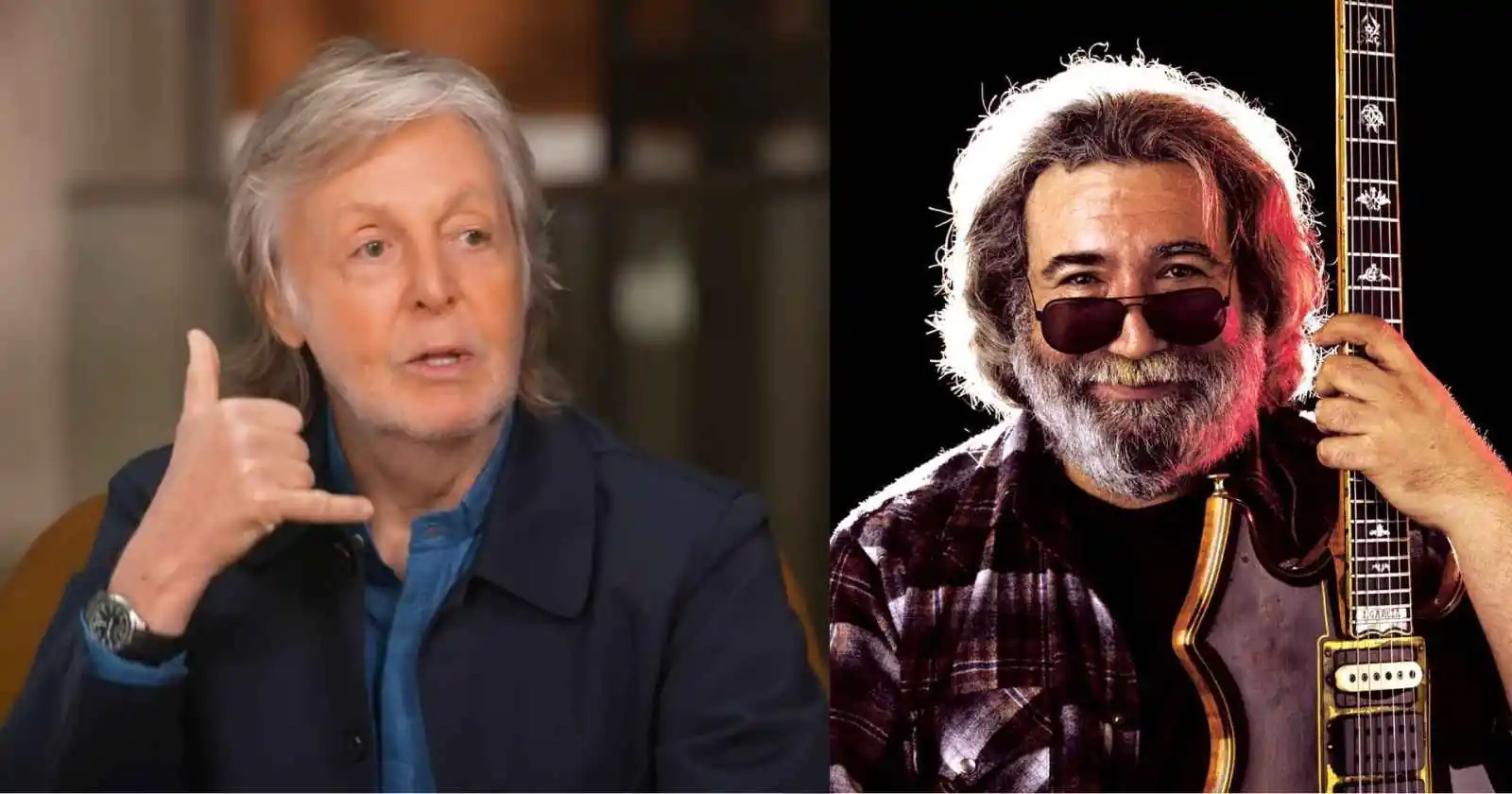
Paul McCartney’s opinion on the Grateful Dead and Jerry Garcia

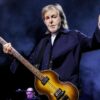
The multi instrumentalist, songwriter and singer Paul McCartney transformed music alongside John Lennon, Ringo Starr, and George Harrison in the 1960s, becoming an influence, directly or indirectly, on almost every musician who emerged in the following decades. The Beatles impact is massive and continues to resonate.
McCartney had the opportunity to see the evolution and ramifications of the revolution they started across every aspect of a band’s creativity. Over the years, he has given his opinion his opinion on many bands, including the Grateful Dead, one of the most successful touring groups of all time.
Paul McCartney’s opinion on the Grateful Dead and Jerry Garcia
Paul McCartney likes the Grateful Dead and the late guitarist and singer Jerry Garcia, whom he praised in the past. The Beatle first met them in the 1960s and even created a photo film about them. “I’ll tell you what prompted me (in going out on the road), the Grateful Dead. ‘Deadheads, man! Allright’ (he imitates Grateful Dead fans). Listen, if Jerry (Garcia) can still do it that good, you know, I mean, there’s hope for us all,” he said during a press conference in 1989. At that time, the Beatle had not performed a show in the United States since 1976. He mentioned the Grateful Dead many times in interviews, saying they were one of the main bands that inspired him to return to the road.
McCartney said at the time that seeing them attract so many young fans gave artists like him, The Rolling Stones and The Who encouragement to continue playing. He was impressed by how they became even bigger in the 1980s and was struck by seeing his nephew’s friends showing up wearing Grateful Dead shirts.”My own personal thing was seeing the Grateful Dead become so popular over the last few years. Because you know, I’ve got like young nephews and their friends and stuff in America, particularly. I’ve seen them grow up and it is strange to see these kids coming around with headbands on and Dead t-shirts. You know, (they are) well into Jerry (Garcia) and the gang.”
He continued:
“So you think: Well, hell it does mean that there isn’t really a youth factor, it’s more a music factor. I do think kids are getting more into 60s music. My kids are certainly like into Otis Redding, James Brown, Traffic, Jimi Hendrix. You know, maybe through Steve Winwood then they go back to traffic,” he said in a TV interview.
The Beatle also noted that the Dead were one of the few bands that could truly play to stadiums full of people during that era. According to him, it was something he felt younger bands could not do. “I think that’s what’s happening now, basically I think that the young kids haven’t quite got the experience to play all these big arenas all the time. So you find groups like the Grateful Dead coming back just because they have got the experience, they can do it. The kids can go out there and they can see a band play live which is the other thing. A lot of the young kids can’t play live,” he said during a press conference in 1989.
Interestingly, John Lennon said in one of his final interviews in 1980 that the name “Sgt. Pepper’s Lonely Hearts Club Band” was created by Paul, influenced by visiting the West Coast scene. “After a trip to America and the whole West Coast long-named group thing was coming in. You know, when people were no longer the Beatles or the Crickets. They were suddenly Fred And His Incredible Shrinking Grateful Airplanes, right? So I think he got influenced by that and came up with this idea for the Beatles,” he said.
Paul McCartney visited the Grateful Dead at their house in San Francisco in the 1960s
Curiously, McCartney met the band still in the 60s, when he visited them at their Ashbury Street house in San Francisco’s Haight district. They had mutual friends and as he revealed in the documentary “It Was 20 Years Ago Today” (1987). The Beatle thought that whole movement wouldn’t last that much. “I remember going to Ashbury district where the Grateful Dead lived in San Francisco. I’m going around to see them because we had mutual friends. I went around and sort of called on them.”
“It was just like that, you know, just like mates and stuff. I remember thinking ‘I can’t see this lasting’. Because the media are going to get this and all this ‘Flower Power’ and Haight Ashbury. It (would) pretty soon (be) turned to be rip off street, when they knew kids were running away from home and going to Haight Ashbury to be a wonderful peaceful person. So of course, all the rip off merchants started to populate those places: Sunset Strip, Haight Ashbury,” Paul McCartney said (Transcribed by Rock and Roll Garage).
The term “rip off merchants”, used by Paul, is British slang for people who exploit others financially. They will often be overcharging, selling poor quality goods or taking advantage of vulnerable people. He felt that once it became fashionable and was picked up by the media, many of those people would appear in order to cash in.
The Grateful Dead photofilm that Paul McCartney did
McCartney was married to Linda Eastman from 1969 until her death in 1998. She was a famous photographer who shot many bands during her career, including the Grateful Dead. In the 1990s, they decided to retrieve the negatives of photos she had taken of them in the early days. Thoso images of them during that era were rare, so they decided to create a photo film.
The whole process took years to be completed and, sadly, was not ready until after Garcia’s passing in 1995. The film was released the following year and screened at several film festivals. It was McCartney who chose their songs ‘That’s It For The Other One’, ‘New Potato Caboose’ and ‘Alligator’ for the soundtrack. They perfectly aligned with the images.
During the making of the movie, he was in contact with Jerry Garcia. But when it was finally released, Paul McCartney lamented he was not able to show him the result. ”I heard on the news that Jerry had died. I thought, ‘Oh no, I was just about to show the film to him. I’d been in correspondence with him, because he was a painter and I thought he’d like this. Unfortunately, I missed him. I suppose it has become a little bit of a tribute to Jerry because of it.”
Paul McCartney continued:
”If Andy Warhol can film the Empire State Building for three hours, I figure I can do something with four rolls of film,” he told the New York Times back then. He recalled that when he was ill as a child, he used to stare at a newspaper photograph until he could imagine it moving. Some of the Grateful Dead photos taken by Lind gave him that same impression.
”I noticed where she was trying to get a portrait of Bob Weir, she would take a whole roll of him, one photo after another. Of course, she only needed one shot, but in looking at the whole roll it looked like a movie. Your eyes almost ran it all together.”
The impact of the Beatles’ “Sgt. Pepper’s” on the Grateful Dead according to Jerry Garcia.
Although the Grateful Dead’s music was quite different from what the Beatles were doing for most of their career, they were influenced by them. According to Jerry Garcia, it was especially the album Sgt. Pepper’s Lonely Hearts Club Band which was an important influence. They covered many of their songs live over the years like “Dear Prudence” and “Revolution“.
“The Beatles, I’d say, mainly the thing was the movies, really. (They are) the thing that did it more than the records did. Because the records, both The Beatles and The Rolling Stones… The Stones was all stuff that I grown up with it, like retakes of the old Marshall Chess Records. It was a little Muddy Waters, a little Chuck Berry, you know. But it was all stuff that I’d heard before and I understood the way it worked, the way it functioned.”
“At that time I’d been playing Bluegrass banjo for about 4 or 5 years and it wasn’t the music so much that interested me. The Beatles, their first records were so sappy, I didn’t really like them that much, frankly, you know. But when the first movie came out ‘A Hard Day’s Night’, it had such a great flow to it, such great style and the thing of fun. At that time I was playing very loosely with friends, I sort of surrendered to that idea to ‘I want just want to have fun! Heck with being serious,’ you know.”
Jerry Garcia continued:
“So I was in that frame of mind anyway. Seeing this movie of these guys who were playing and having fun. That’s the thing I think that kicked The Beatles off the most in the West Coast as far as the Folk music, coffee house post Beatnik circuit. Most of the San Francisco bands evolved from that space.”
“The first time that we heard ‘Sgt. Pepper’, we were in New York. (We were) playing at the Café Au Go Go, down the Village. One of the girls who worked there came in with a copy of it and put it on the PA. I remember listening to it and it was sort of transparent, it sort of went through my head. (We listened a few more times) and started to sneak in. Of course, The Beatles had been kind of leaking psychedelia in the last few records before that. They were kind of getting squishy around the edges.”
“So this record really came to be the anthem of Haight Ashbury, if you could say anything was. I would certainly say that (one) and possibly ‘Blonde on Blonde’ (Bob Dylan), was the other one of those records that you heard all time, in every house,” Jerry Garcia told Rolling Stone in 1987 (Transcribed by Rock and Roll Garage).
Paul McCartney was at the Rock and Roll Hall of Fame ceremony in 1994, when the Grateful Dead were inducted. In the official speech videos, he can be seen applauding the band.