

ARTICLES
The 2 Led Zeppelin albums Robert Plant thinks are underrated

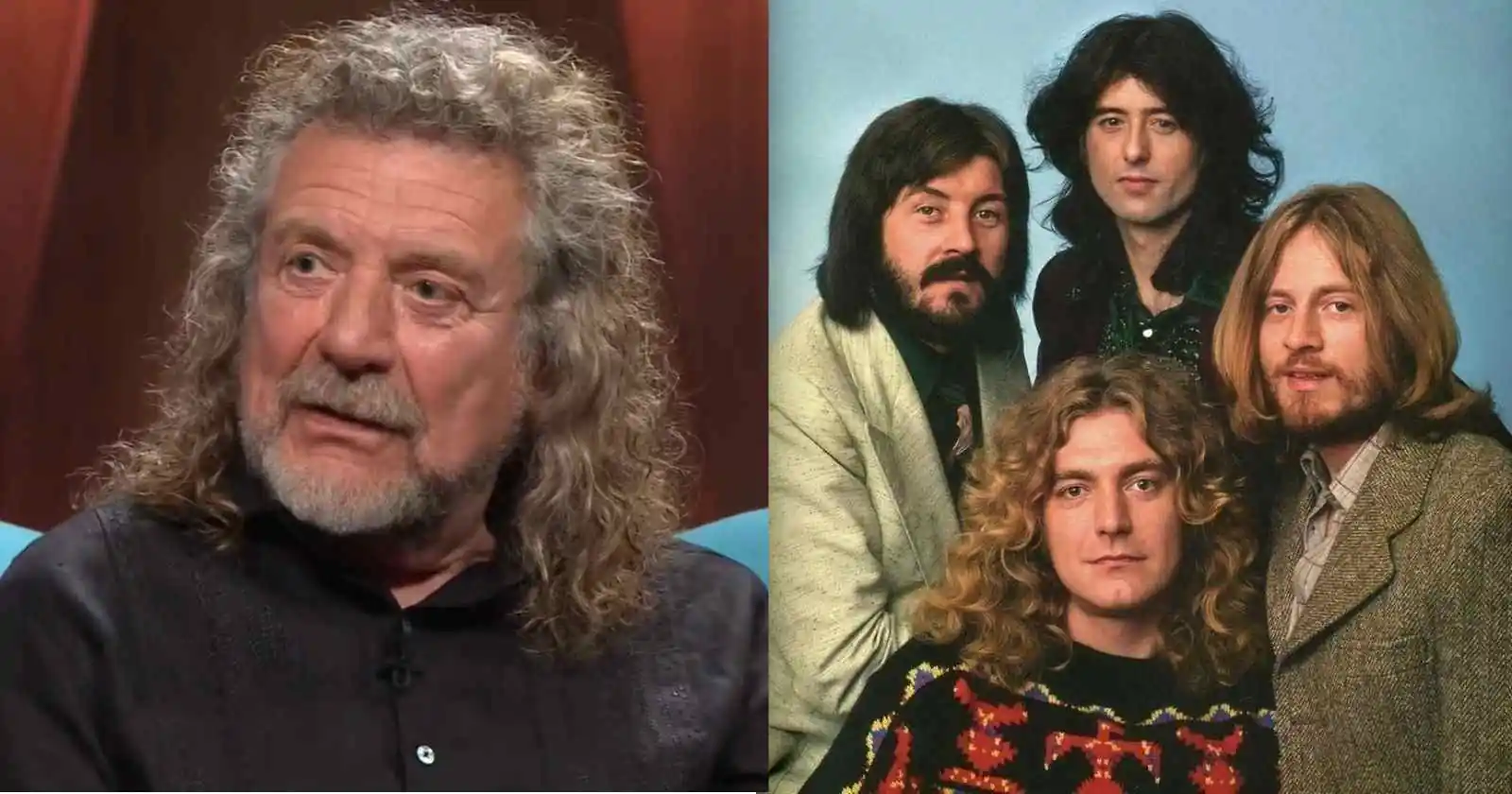
During their 12-year career, Led Zeppelin released eight studio albums and a posthumous one in 1982, which featured recordings by the late drummer John Bonham alongside Robert Plant, Jimmy Page and John Paul Jones. Among those records, some were not as well received by fans and Plant once revealed which two albums he believes are underrated.aThe 2 Led Zeppelin albums Robert Plant thinks are underrated
The 2 Led Zeppelin albums Robert Plant thinks are underrated
“Led Zeppelin III”
“I don’t have any favorites (Zeppelin albums). Each album comes from definitely a different period in the evolution of each of us individually as creators and the role that we take in life. The external stimuli changed. So the songs are full of lots of different meanings. Each album has a different atmosphere. The third album (seems to be one of the albums) that people didn’t get off on quite as strongly as the other ones. But I think (it contains) the basic ingredients for the further pursuance of what we’re doing… the turning point to relieve the tedium of repetition,” he said in an interview with Mark Ginsburg in 1977.
Although the album was criticized by many fans and especially critics, Plant believes it’s one of their finest moments. “I think it was a great success (the album), (but it was) the least successful Led Zeppelin album. (The) critics (were) screaming for our lives and blood saying ‘What’s this crap?’ It was probably one of our finest moments and the fact that we deemed that we had to do it at all is a fine moment,” he said in an interview.
Even though he said it was their least successful record, it sold more copies than the final ones they released. It peaked at number in many countries at the time like Australia, Canada, Italy, United Kingdom and United States. Some of the most famous tracks are “Immigrant Song”, “Since I’ve Been Loving You” and “Tangerine”. Curiously, the album began taking shape in a cottage in Wales, far away from the big cities and the rock and roll lifestyle. Robert Plant showed the area in an interview with AC/DC’s Brian Johnson.
He said:
“I came up here after ‘Led Zeppelin II’, which we recorded mostly on tour. Because we played in America so much at that point in time. (I) came here with Maureen, my daughter Carmen and dog called Strider and we went to the cottage I used to go when I was a kid. And we began the writing of ‘Led Zeppelin III’ up there and it was great.”
“Because it was so far away from the chaos of touring, you know what it’s like, I mean, Christ, you guys (AC/DC), you kept going, we had to stop. So you know what it’s like. So the idea of going from those gigs that you know about where there is complete turmoil and (a lot of) energy to come to these kind of places (with no one and with a lot of nature), gave us, I suppose the foundations for ‘Led Zeppelin III’ which was much more pastoral and acoustic based,” Robert Plant said (Transcribed by Rock and Roll Garage).
“Houses of the Holy” (1973)
The second album mentioned by Robert Plant is “Houses of the Holy”, released in 1973. It was the first Led Zeppelin album to feature only original material, with no covers. Curiously, Robert told High Times in 1991 that this was his favorite album of the band. “’Houses Of the Holy’ was a very inspired time.”
“I think the material is very much to the point. Very focused and strong. I think ‘The Crunge’ was great; ‘Rain Song’ was really good. There was a lot of imagination on that record. I prefer it much more than the fourth album. I think it’s much more varied. It has a flippance which showed up later again on in ‘In Through The Out Door’, with stuff like ‘Hot Dog’ and ‘Candy Store Rock’ on ‘Presence’, which was a total thing of me trying to be Elvis or something,” he told High Times.
Jimmy Page shared Plant’s opinion, believing it was better for the band to find a new direction. Everyone wanted another “Led Zeppelin IV”, but simply repeating themselves wasn’t the right option.
Jimmy Page said:
“My main goal on Houses of the Holy was to just keep rolling. Although everyone was clamoring for another ‘Led Zeppelin IV’, it’s very dangerous to try and duplicate yourself. I won’t name any names, but I’m sure you’ve heard bands that endlessly repeat themselves. After four or five albums, they just burn up. With us, you never knew what was coming. I think you can really hear the fun we had on Houses… and you can also hear the dedication and commitment,” Page said in Brad Tolinski’s book “Light & Shade”.
The iconic album cover, which features the Giant’s Causeway in Northern Ireland, could have been quite different if the band had hired Hipgnosis, the design company behind many famous album covers, including those by Pink Floyd. However, as Jimmy Page recalled, they gave a terrible idea that disrespected the band.
He said:
“We had commissioned them to design ‘Houses of the Holy’, and this guy Storm Thorgerson came in carrying this picture of an electric green tennis court with a tennis racket on it. I said, “What the hell does that have to do with anything?” And he said, “Racket. Don’t you get it?” I said, “Are you trying to imply that our music is a racket? Get out!” We never saw him again. We ended up dealing with one of the other artists. That was a total insult—racket. He had some balls! Imagine. On a first meeting with a client!” he said in the book “Light & Shade”.
Like “Led Zeppelin III”, “Houses of the Holy” was a number one hit album in several countries and it’s appointed as their third best-selling album. It sold an estimated amount of more than 12 million copies worldwide. It has tracks like “The Song Remains the Same”, “Over the Hills and Far Away”, “D’yer Maker” and “The Rain Song”, which was the track Jimmy Page composed after George Harrison told John Bonham that what he didn’t like about them was that they never did any ballads.