




ARTICLES
Ian Anderson’s opinion on David Bowie

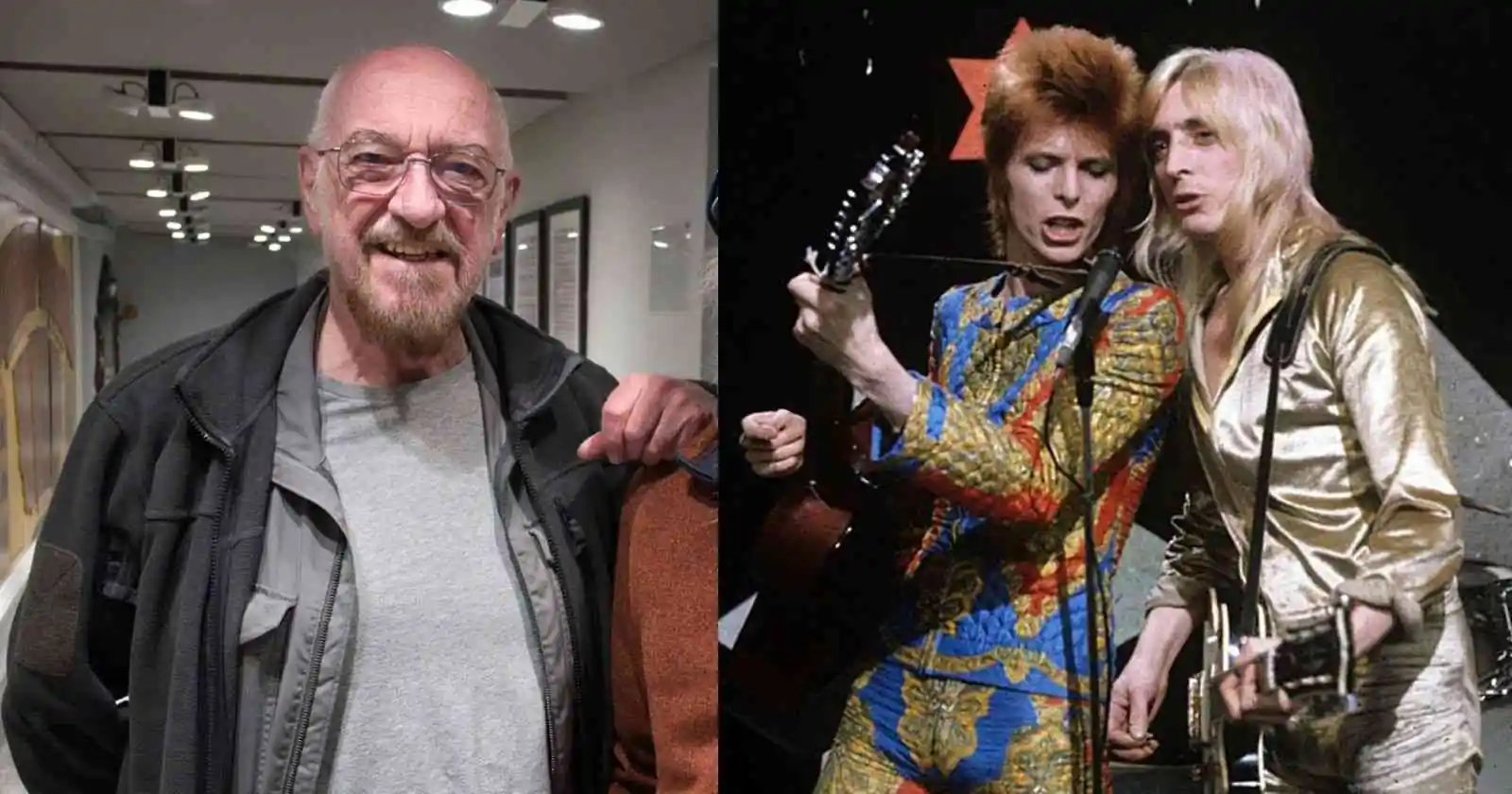
One of the most important British musicians of all time, Ian Anderson has been, for almost six decades, the leader and mastermind behind Jethro Tull, one of the most influential Progressive Rock bands in the world. When he helped form the group in 1967, many musicians were experimenting and putting exciting new ideas on record.
One of them was David Bowie, who was one of the few artists in the world that simply couldn’t be labeled as anything other than an innovator. He was always reinventing himself and expanding the boundaries of his work. Anderson had the chance to witness Bowie’s rise to stardom and followed his career closely. Over the decades, he has spoken about many musicians, including Bowie, sharing his thoughts about him.
What is Ian Anderson’s opinion on David Bowie
Anderson was always a big fan of David Bowie and even had the chance to work with him in studio, although he was the producer and the late Pop Rock star was playing the saxophone. When the musician passed away in 2016 at the age of 69, Anderson released a statement calling him “Art Pop supremo”.
“Throughout the 60s in the painterly world, Pop Art held sway. No surprise that, towards the end of that decade, former Art and Design student David Bowie would give himself to music and become the archetypal ‘Art Pop’ performer and recording artist. Unusually in the world of Pop and Rock where British singers feel strangely compelled to sing in ridiculous fake American accents, Bowie proudly used his own natural spoken vocal tones to carve a niche as one of the few high baritone singers of the Pop/Rock world.”
“In 1974 I was asked by British folk group Steeleye Span to try to get David Bowie to play alto saxophone on a track I was producing for them. Somehow, although we didn’t know each other, I managed to get his phone number. He agreed to come to the session. In prompt and professional fashion he executed the desired solo lines and went on his way with the recorded words, ‘I’ll see you later’”.
He continued:
“Many years later in 1997, I managed to push my way past minder heavies into his dressing room at a big German TV show we were both appearing on. I thanked him for playing on the Steeleye song and, more importantly, for serving as a role model to me in regard to offering the gift of music with no fee or royalty for performing on other artists’ records, something I have always done since.”
“He looked at me thoughtfully and said, ‘I’d forgotten about that. I suppose it’s too late to send in an invoice?’ This while smiling a dazzling smile with his new and perfect teeth. For David to die now is a huge sadness. Always the Mother Of Reinvention, there should have been more to come. But in true theatrical narrative fashion, always his forte, he released the iTunes chart number one album on a good Friday and his death was announced on early Monday, UK time. Could only have had more impact, perhaps, if the events had been the other way round.”
Ian Anderson continued:
“But Bowie resurrected himself on many occasions, such was his strength. A strength born of restlessness and the urge to move on. The most inventive, original and very British of artists, perhaps, since the late 60s. David Bowie. Art Pop supremo. RIP,” Ian Anderson said.
There are three interesting coincidences between the two artists. Bowie and Anderson were both born in 1947 and started their careers in 1962. Then in 1967, both Bowie and Jethro Tull released their debut records.
How David Bowie ended up playing the saxophone with the band Ian Anderson produced
As Anderson recalled briefly in his statement after Bowie’s death, he first met Bowie in the early 70s. It was when he was producing the British Folk Rock band Steeleye Span. The Jethro Tull leader was in charge of producing their sixth album called “Now We Are Six”. They asked him if he could invite Bowie to play the saxophone in the track “To Know Him Is to Love Him”.
He recalled the complete story in an interview for the Piotr Kaczkowski book in the 1990s. “I’ve only met him once, in 1973 or 1974. (It was) when I was producing a record for an English Folk Rock band called Steeleye Span. They asked me if I could get David Bowie to come and play saxophone on their record. But I didn’t know David Bowie and I managed to get a phone number from his record company. I phoned him up and said: ‘You don’t know me, but could you possibily come and play on these guys record?’ He said: ‘Yeah! When you want me to do it?’ I said: ‘Well, when can you do it?'”
Ian Anderson continued:
“He said: ‘This afternoon, three o’clock’. So I said: ‘Ok, great!’ So I thought: ‘God, he’s gonna ask for, you know, 2000 or something. But he came, played the saxophone on the track. He smiled, shook hands with everybody and didn’t ask for any money and went away. That’s the only time I ever saw David Bowie. But he gave me a good lesson, that if you want to do it you go and do it. And it’s a gift, it’s free, just giving someone a little bit of what you do anyway. So since then I’ve never asked for any money when I play on other people’s records,” Ian Anderson said (Transcribed by Rock and Roll Garage).
Steeleye Span was formed in 1969 and was active until 1978, before reuniting in 1980. Since then, the group has remained active and continued releasing studio albums. So far, they have released 24 records, the same number as Jethro Tull as of 2025. Their latest album is “Curious Ruminant” (2025).
Bowie originally wanted to be a saxophonist and played the instrument in the beginning of his musical career. Although the musician passed away in 2015, Jethro Tull still has not surpassed him in the number of studio albums released. As of 2025, Bowie still has two more albums in his solo career than Jethro Tull has released