







Classic Rock
Bruce Kulick talks about his recent health issues

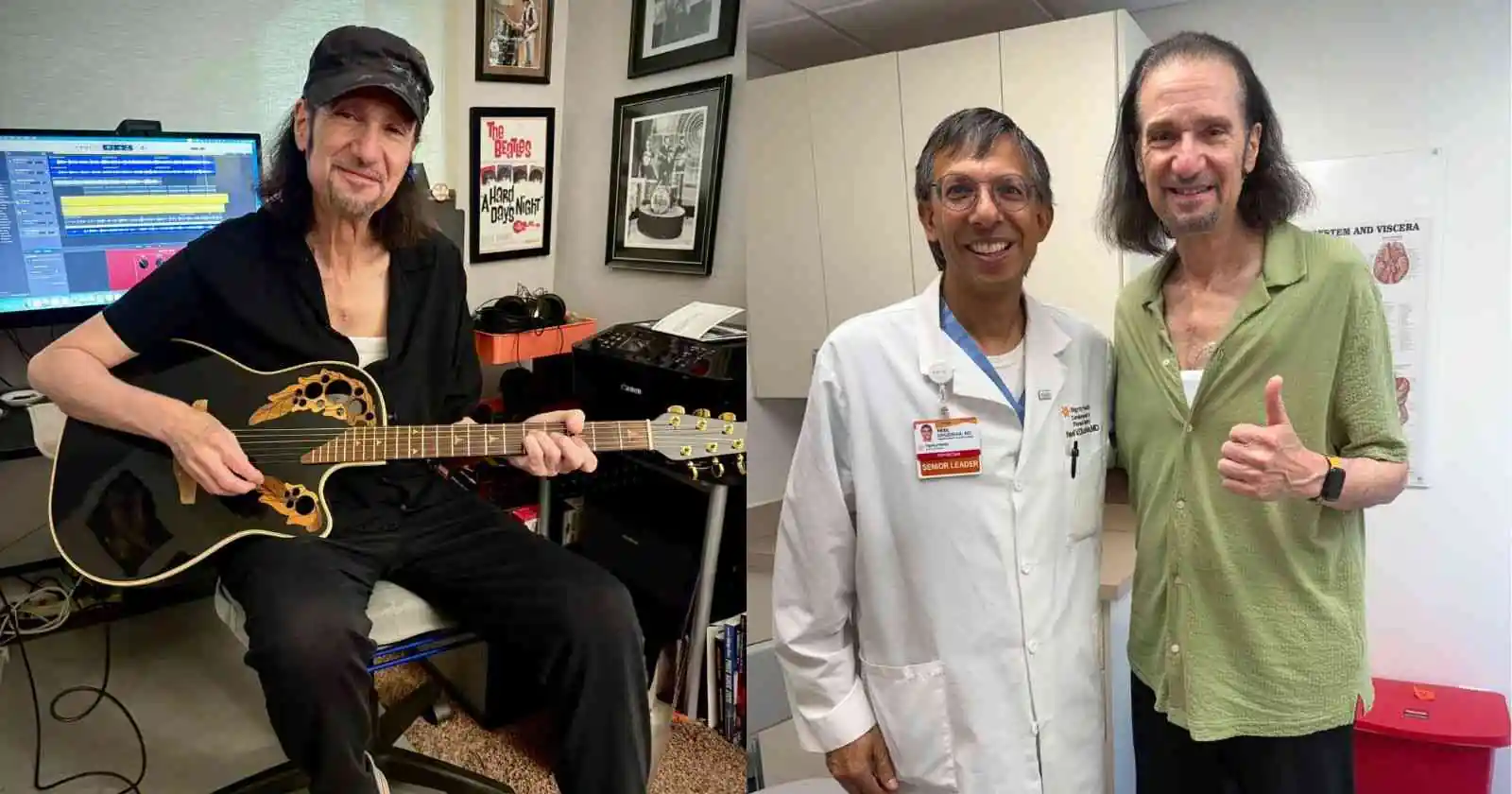
Guitarist Bruce Kulick, best known for his time as a member of Kiss from 1984 to 1996, recently underwent open-heart surgery and has shared an update on his current health status in an interview with Rock From the Heart. He will perform with Kiss in Las Vegas on their Kiss Kruise Vegas next November, for their special Unmasked Kiss show.
Bruce Kulick talks about his recent health issues
“I always believed in every year I got a physical, especially by the time I was, like, 40 or 50, (to) just see my doctor. And it was my primary back in California about 12 years ago, and he’s listening to my heart and he goes, like, ‘You have a murmur.’ And I go, like, ‘Okay. I don’t know what it means.’ And not every murmur means you need surgery, everybody out there. But it could also mean there is definitely something unusual with your heart, and you should get it checked out.”
“So then I’m at a cardiologist in L.A… And he was, like, ‘Okay, you have…’ They did whatever test it was back then, I don’t remember, ultrasound, this or that, ‘You have a bicuspid valve.’ And to be quite honest, back then, all right, it was a name, but I didn’t really understand the mechanics of what that meant. But I knew it was something… They said, ‘We need to keep an eye on this, ’cause later in life you’re gonna need to do something.’ That’s all I knew. And every year I’d go, I didn’t feel that different from year to year, basically. Except you get a little older. And every year it was, like, not much of a change. ‘Okay, see you in six months for this next test,’ or a year. And then finally I did the tests in November of ’25, and when I saw the cardiologist in December, he said, ‘Okay, now you’re severe aortic stenosis from your bicuspid valve.'”
He continued:
“And again, I didn’t feel that different, so I was kind of like staring at the floor. And he’s explaining everything to my wife, Lisa, who came with me. And he says, ‘Now it’s much more common. Not to wait. You’re 72. You wanna consider repairing this while your baseline is strong,’ meaning, for the people listening, that you’re generally healthy, so you can handle [it], instead of being in some bad way. So at that point, he said, ‘Well, we need to do a few more tests to see. Maybe we can do the TAVR (Transcatheter Aortic Valve Replacement). We’ll see. Not sure.’ Now, I was always told about the TAVR, which is a less invasive repair.”
“Although, as soon as I started to do the research in early January, I was realizing, ‘I’m gonna wind up with open-heart surgery.’ I mean, he never took that off the table, but those other tests were gonna tell — the CT scan and then, of course, an angiogram. But he knew from the CT scan that I needed open-heart surgery, that trying to put a valve in through a vein, [which is] less invasive, of course, it wouldn’t be a great fit and I wouldn’t get great results.”
“I knew one other guy — I’ll keep him out of it, but he’s a famous actor that I’ve met and we’ve been in touch; he’s had a lot of heart problems — and he told me… He also had a bicuspid many years ago, but he’s had other issues. Fortunately, he’s well, but I know he’s had a lot of experience, and he said, ‘I’ve had some friends do the TAVR for the bicuspid, and it was not a good result.’ Which is exactly why my cardiologist and then the surgeon I met did not wanna go that way. Why would somebody else choose that? Well, if you think you only got five more years of your life, go for it. ‘Cause it’s a hell of a lot less invasive. You’re only in the hospital a few days.”
Bruce Kulick continued:
“And open-heart, we know, is minimum two months and more likely three months until you’re much more healed, et cetera, et cetera, with a lot of rules and regulations. But I already knew by the time I went in for the angiogram, which, by the way, they said, ‘Oh, you have beautiful vessels.’ Just in case, at that point, they would give you a stent, if you needed it. And they certainly don’t wanna go into your heart to repair a valve if you’re already blocked elsewhere that they can’t see. Hence the angiogram. And you’re in twilight when you do that, so you kind of hear them.”
“You don’t really feel any pain or anything. But it was just so funny, after 20 minutes, the nurse just says, ‘You have beautiful vessels. We don’t need any stents. You’re fine. You’re gonna go relax for a couple hours, and then you’re going home.’ But, of course, he was able to see that the calcification from the bad valve was severe… That’s from having two flaps instead of three, which is a normal heart, and the two flaps make that valve work like a fish, and blop, blop, blop, and it’s gonna leak, and you will get calcification no matter how healthy a diet you eat.”,” Bruce Kulick said (Transcribed by Blabbermouth).